Unlike many biomedical outcomes, health experiences and many health behaviors rely on human perception and interpretation, making the respondent the primary measurement instrument. This raises specific methodological issues related to construct validity, response processes, contextual influences, and the interpretation of observed changes.
The QUANQUAL axis aims to address these challenges through complementary quantitative and qualitative approaches.

The QUANQUAL axis aims to strengthen the methodological analysis and interpretation of health-related experiences and behaviors, focusing on four main objectives:
-
Develop conceptual and methodological frameworks for the design, collection, analysis, and interpretation of self-reported outcomes (SROs);
-
Develop, adapt and evaluate quantitative methods for the analysis of SROs or behavioral indicators, DIF, and RS;
-
Promote the implementation of mixed-methods approaches to study experiences, behaviors and change;
-
Improve the interpretation and communication of results for patients, relatives, healthcare professionals, and researchers through appropriate supports;
- Dubuy Y., Hardouin, J.-B, Blanchin M, Sébille V. Identification of sources of DIF using covariates in patient-reported outcome measures: a simulation study comparing two approaches based on Rasch family models. Front. Psychol. 2023.
Read the publication - Challet-Bouju, G., Brault, V., Perrot, B., Jeu-Group, Desmée, S., & Grall-Bronnec, M. A clustering based on the dynamics of DSM-5 criteria for gambling disorder : A 5-year follow-up of gamblers with and without gambling disorder. Journal of Behavioral Addictions, 15(1), 357‑370
Read the publication - Evin, A., Bourdon, M., Nizet, P., Hardouin, J.-B., Victorri-Vigneau, C., & Huon, J.-F. DEprescribing: Perceptions of PAtients living with advanced cancer. A multicentre, prospective mixed observational study protocol. PloS One, 19(8), e0305737
Read the publication
HOMI-LUNG – a QUANQUAL project
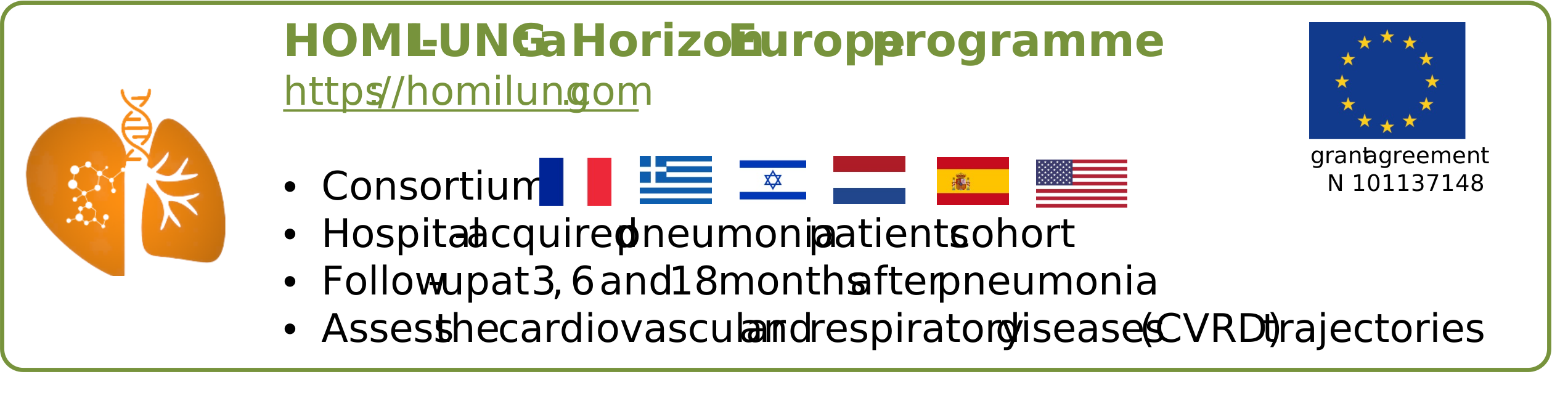
Initiated within the European HAP2 project, the HOMI-LUNG project aims to improve the management of cardiovascular and respiratory diseases following pneumonia through an 18-month follow-up cohort of hospital-acquired pneumonia patients, including the assessment of disease trajectories and patients’ needs.
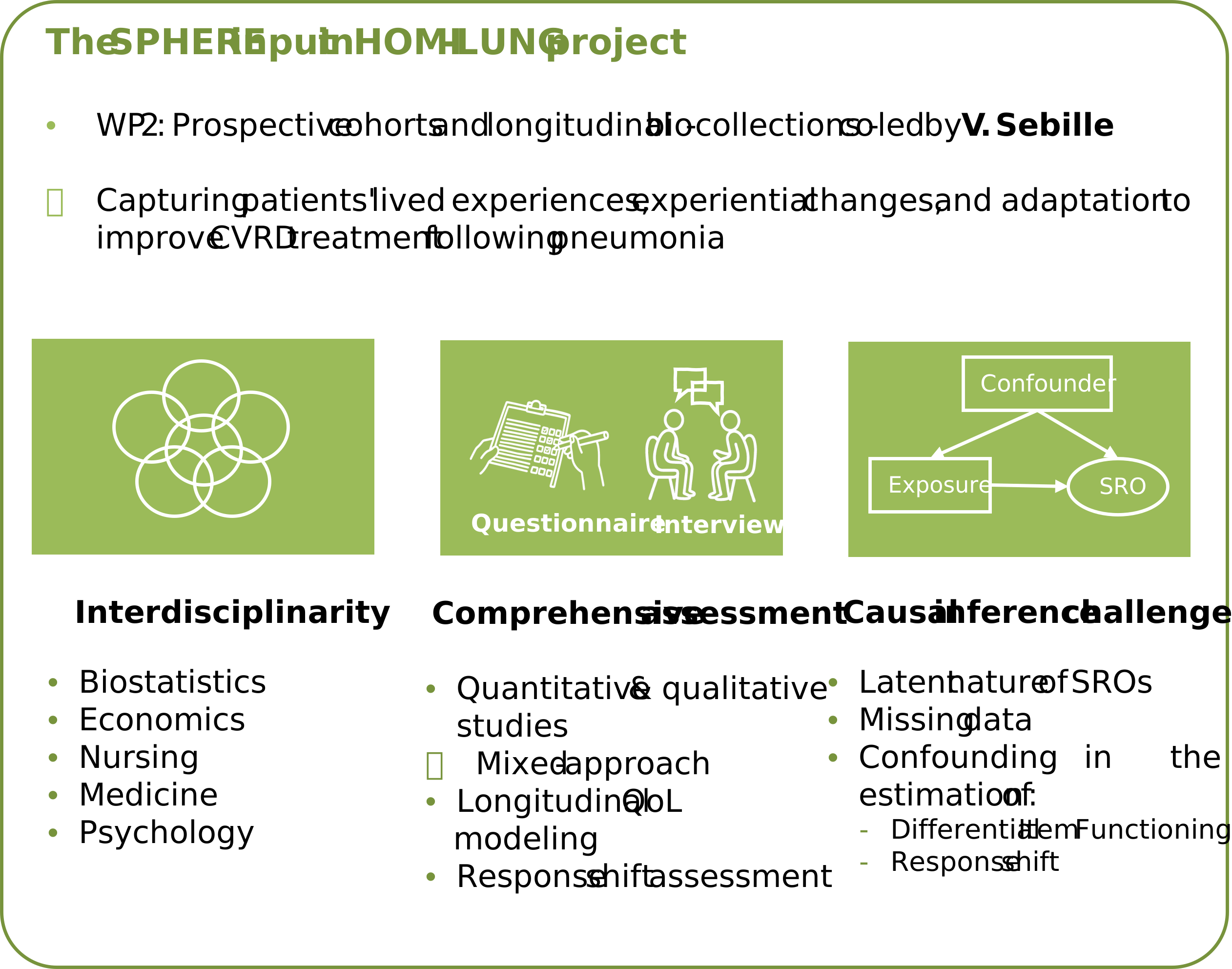
The complementarity of quantitative analyses (response-shift and changes in quality of life) and qualitative analyses (exploration of individuals’ definitions of quality of life and changes in these definitions) are explored within an interdisciplinary framework. Quantitative analyses will focus on accounting for missing data and confounding, by exploring the emerging field of causal inference combined with psychometrics.